
AI that works not as a button, but as your business operating layer
AI Core in KendaliCRM analyzes real CRM data, helps you launch offers, score ideas, find bottlenecks, build growth plans, track sales, and design automations. It's not a separate chat — it's the AI core inside AMOS.
The key difference: AI is built into the business process
Most CRMs add AI as a prompt field. KendaliCRM builds AI around the data: orders, channels, offers, funnels, partners, landing pages, payments and sales dynamics. That's why the AI doesn't just "write text" — it explains where the problem is, what to launch, how to scale, and which actions to take next.
CRM context: offers, sales, traffic, finances and customers.
Pick a scenario: audit, idea, kickoff, growth, tracking or workflow.
A structured report, plan, ranking, roadmap or diagram.
The author understands what to improve in the offer, funnel and communications.
AI Core takes care of models, the queue, billing and resilience
Inside the ecosystem, AI Core runs as a dedicated service: the application sends a task and receives a result without worrying about providers, tokens, cost or technical failures. It's the foundation for every AI module in KendaliCRM.
Routing and Queue
Picks the right AI module, model and quality mode for the task. Heavy operations move into an asynchronous queue and never disrupt the dashboard.
Billing and Fallback
Credit economics: cost is clear before launch, and credits are charged only after a successful result. Resilience lets you switch providers or modes.
Structured Schema
Every module returns a structured result ready for the CRM interface, not "raw" text. AI becomes infrastructure, not a one-off integration.
Transparent cost instead of unknown spend
- AI Core is built on FastAPI, Redis and PostgreSQL as a reusable layer;
- the module assignment and scope of work are visible before launch;
- a preliminary cost estimate for the task in credits;
- credits are charged only after a successful result;
- a price snapshot is saved in the operation history for auditing;
- a single layer serves the CRM, EMA and other web services.
task + CRM context
  → routing (module + model)
  → queue (async)
  → estimate (credits)
  → run → charge after success
  → structured result + price snapshot
The AI modules are gathered into a dedicated workspace
The author sees the available tools, launches the right scenario, and gets a result in a format that can be put to work in sales, marketing, content or automation.
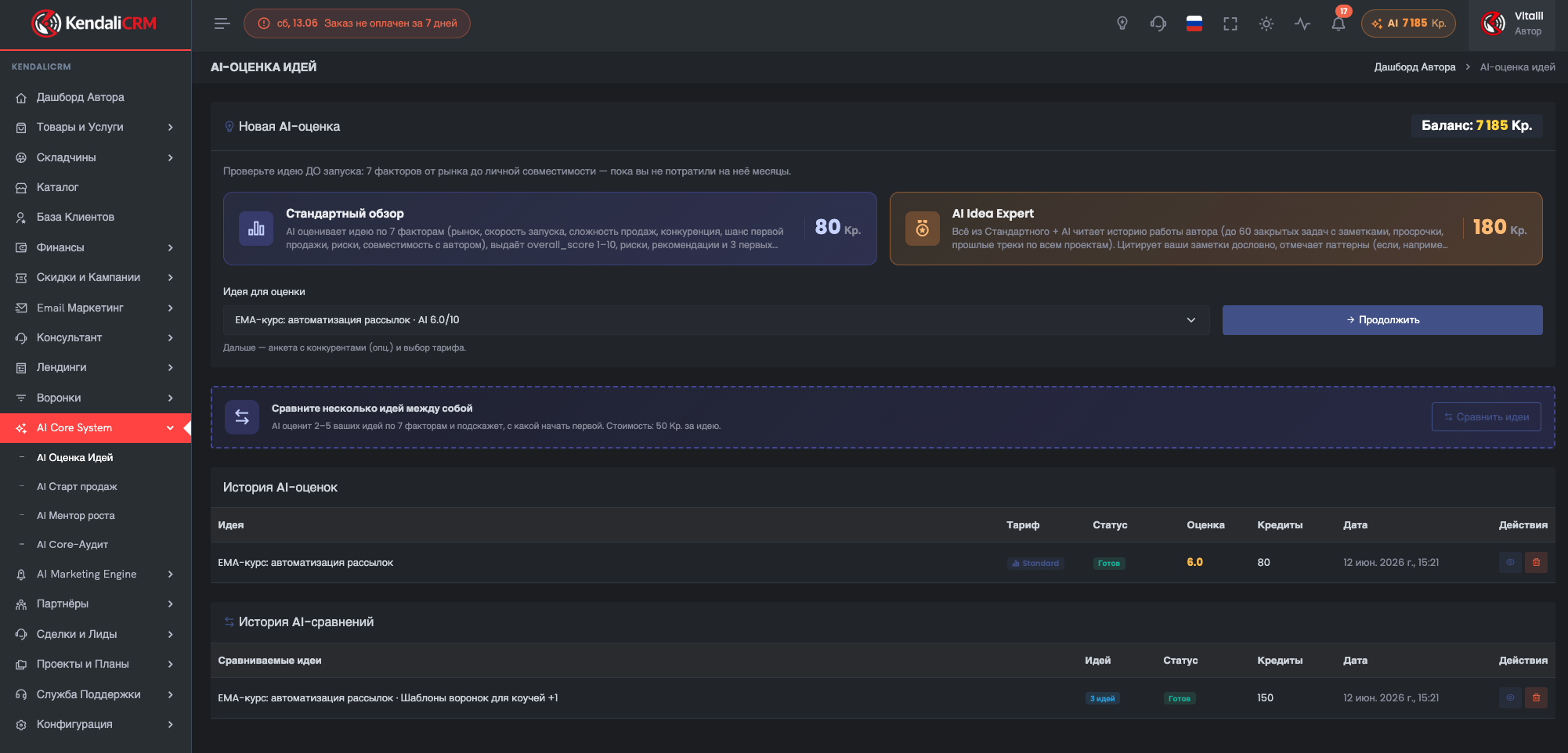
Seven scenarios that cover a marketer's strategic work
Each module solves a separate business task: from validating an idea and a cold launch to scaling, weekly sales control and designing automations.
AI Marketing Audit
A complete marketing breakdown on real CRM data from the past 90 days: sales, traffic, funnels, channels, partners, metrics, bottlenecks and an improvement roadmap.
AI Sales Kickoff
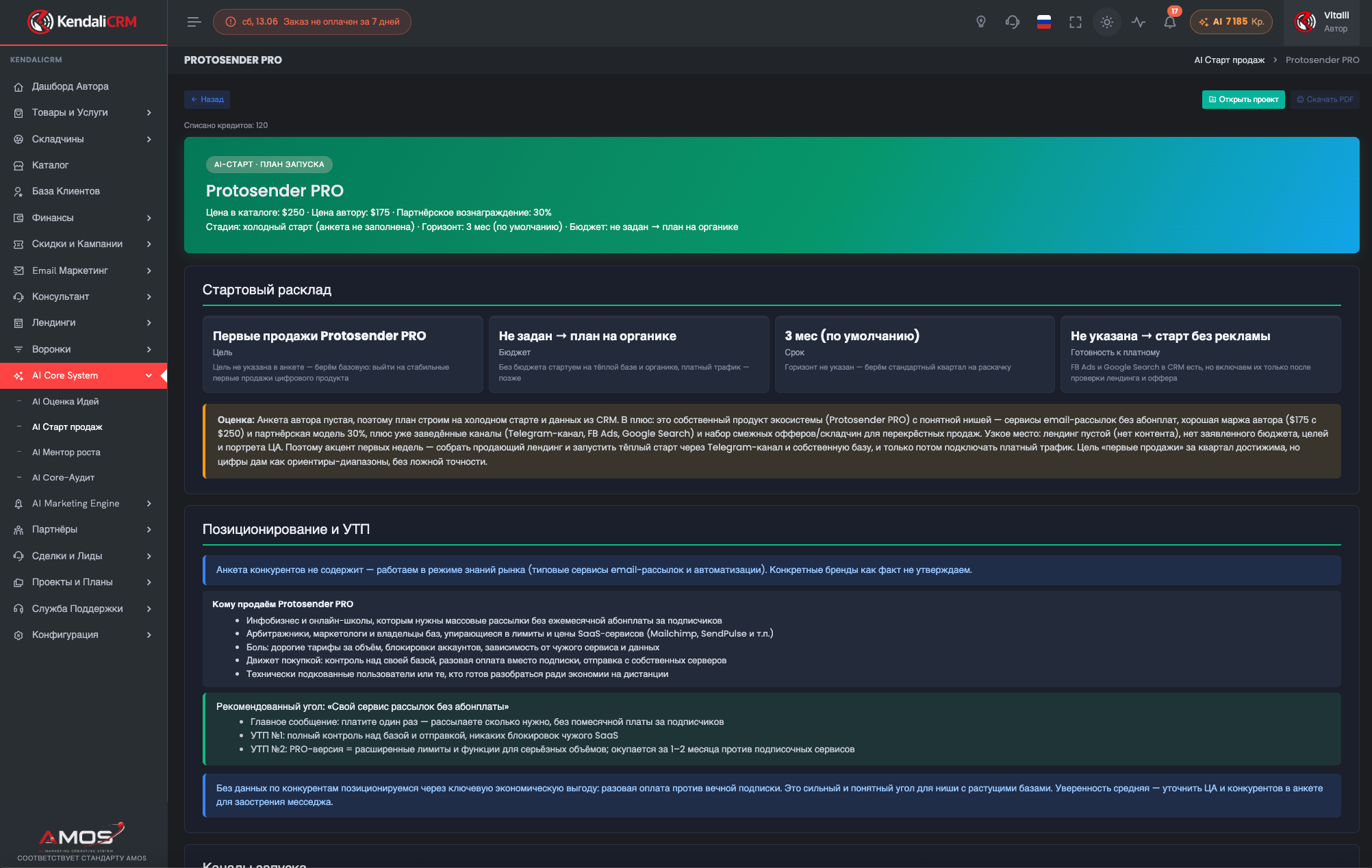
A cold-launch plan for a new offer: positioning, audience, first channels, weekly steps, risks and an action checklist up to the first payments.
AI Growth Mentor
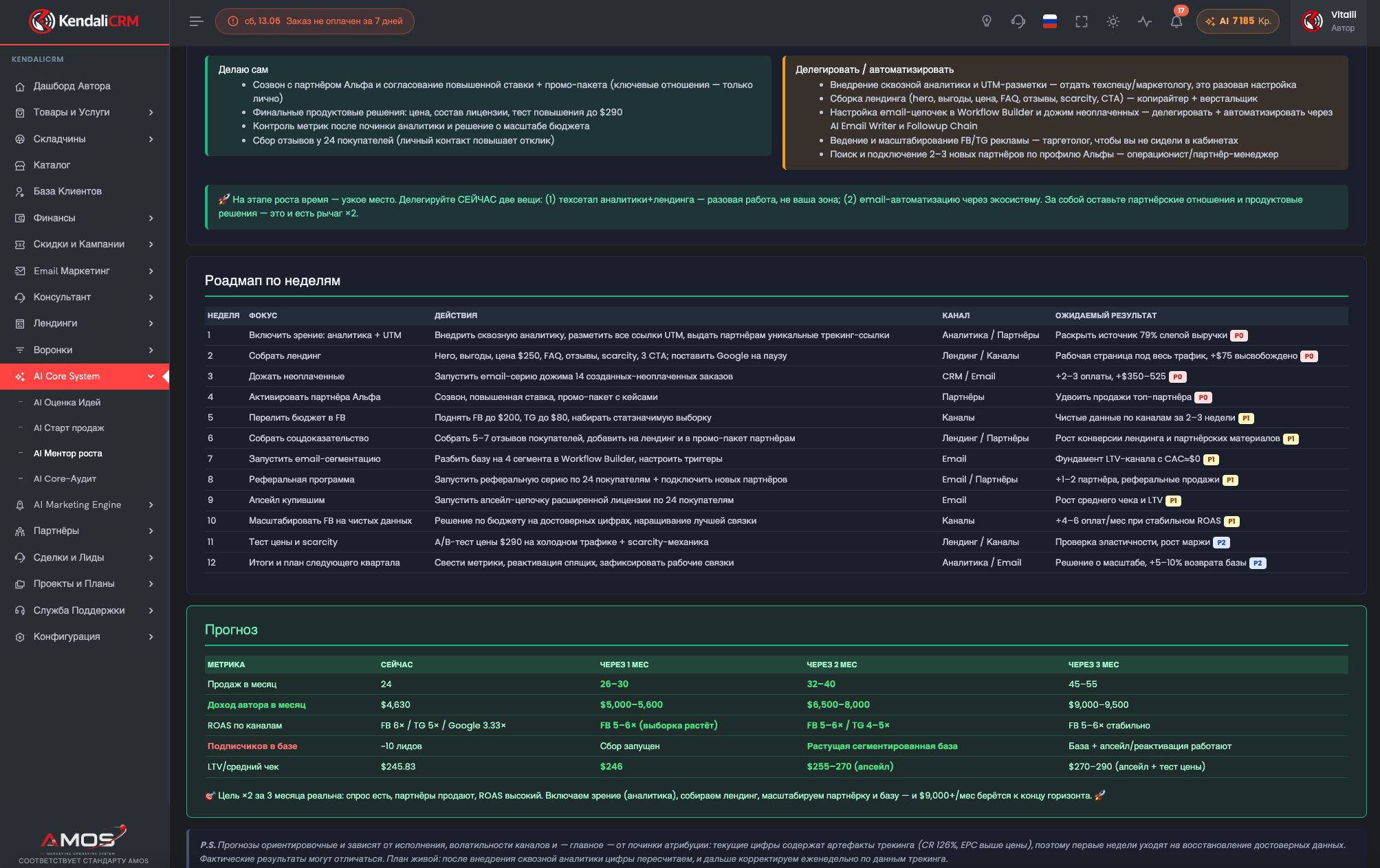
A scaling plan for an existing offer based on current sales, channels and conversions. It tells you what to double down on and what not to push any further.
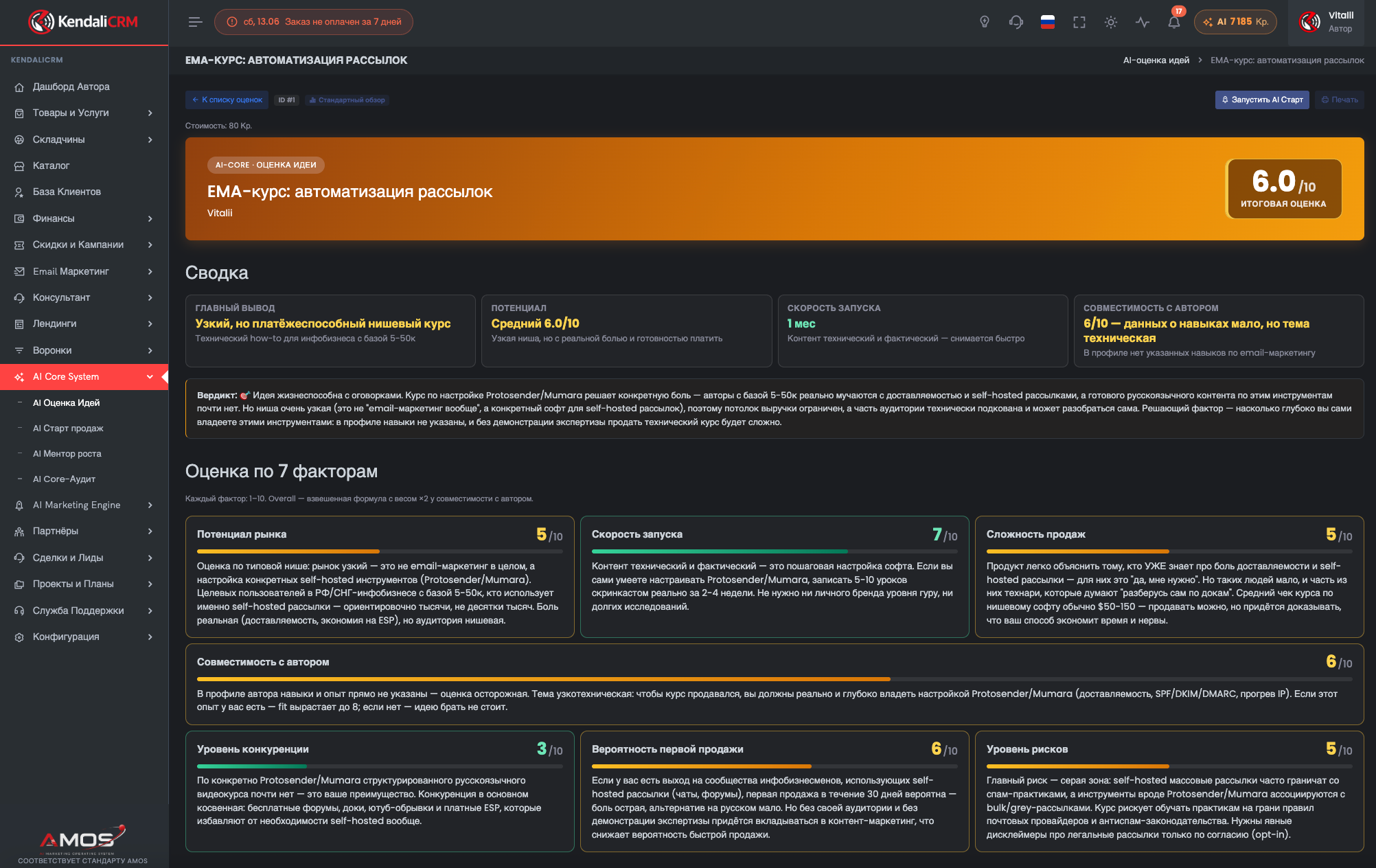
AI Idea Scoring
A breakdown of a business idea by potential, risks, launch complexity, monetization and the next step. Ideal before you spend time on development.
AI Idea Comparison
Compare 2–5 ideas in a single table: strengths, weaknesses, risks, launch order and the best option for your current business.
AI Sales Tracking
A weekly breakdown of metrics, forecast, anomalies and recommendations. A useful management habit: look at the numbers, not the emotions.
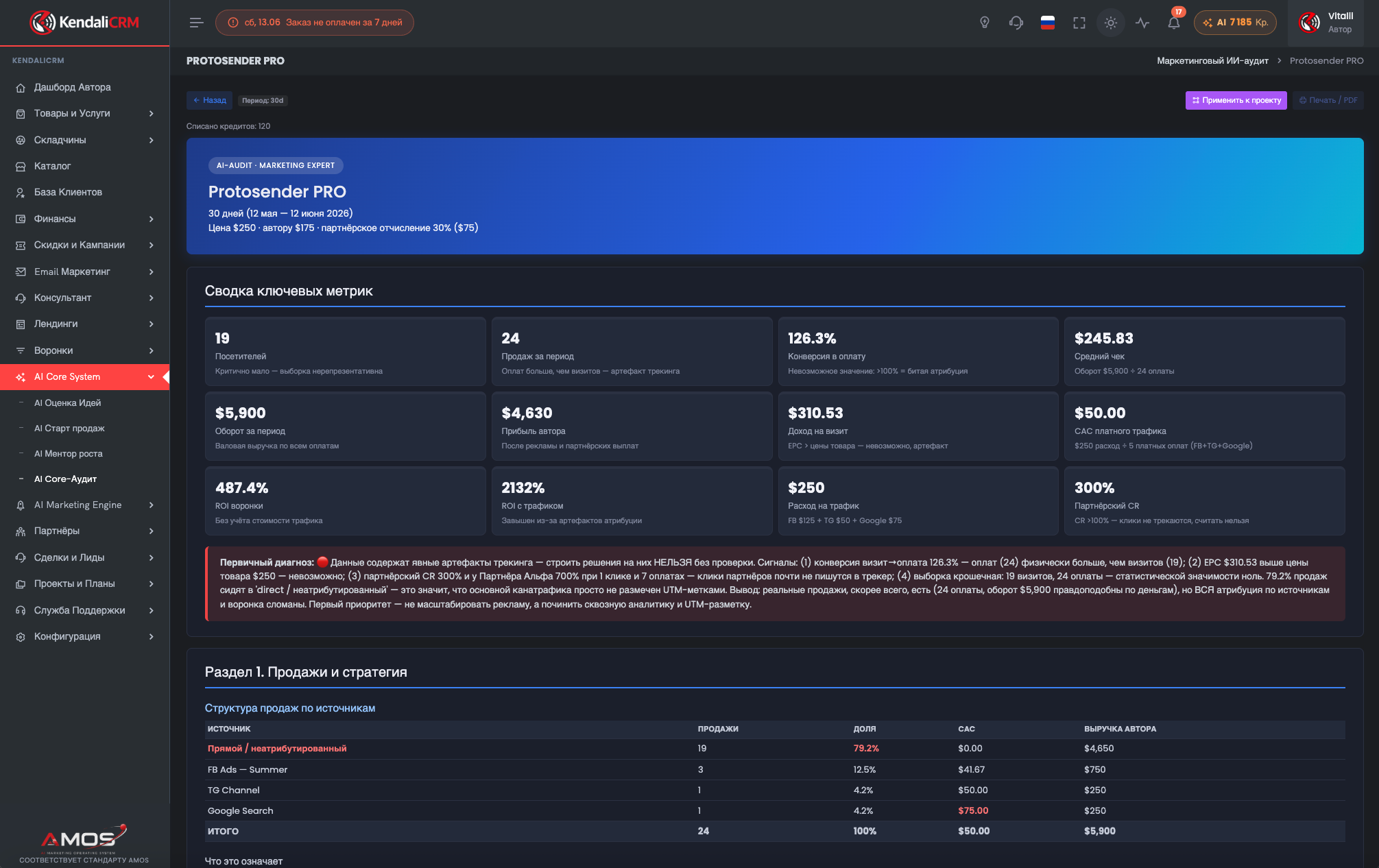
The audit works with facts, not guesswork
The marketing audit uses your business data: orders, traffic, funnels, the affiliate program and channels. As a result, the author gets not abstract advice, but a list of specific bottlenecks and actions.
CRM context instead of an empty prompt
- sales dynamics and paid orders over the period;
- landing page visits, UTM sources and channels;
- conversions between funnel levels;
- revenue, refunds, profit and payback;
- how affiliate links and commissions perform;
- growth points, risks and a step-by-step roadmap.
metrics
  → bottlenecks
  → insights
  → risks
  → priority actions
  → 7 / 14 / 30 day roadmap
From the author's task to a ready-to-use solution in a single pass
AI Core requires no manual data prep. Just pick a scenario — the rest is gathered from the CRM, passed through the core, and returned ready to act on.
Pick a scenario
The author opens the AI Core panel and launches the module they need: audit, idea, kickoff, growth, tracking or workflow.
Gather context
The CRM automatically gathers offers, orders, channels, funnels, partners and finances for the chosen period.
Core processing
AI Core routes the task, queues it, estimates the cost and runs it on the selected model.
Ready-to-use result
The author receives a structured report, plan or diagram and turns the AI output into concrete actions.
AI helps you not only analyze the past, but also choose your next move
Before launching a new product, the author can score the idea, compare several options and get a sales kickoff plan. That reduces the risk of building a product nobody will buy.
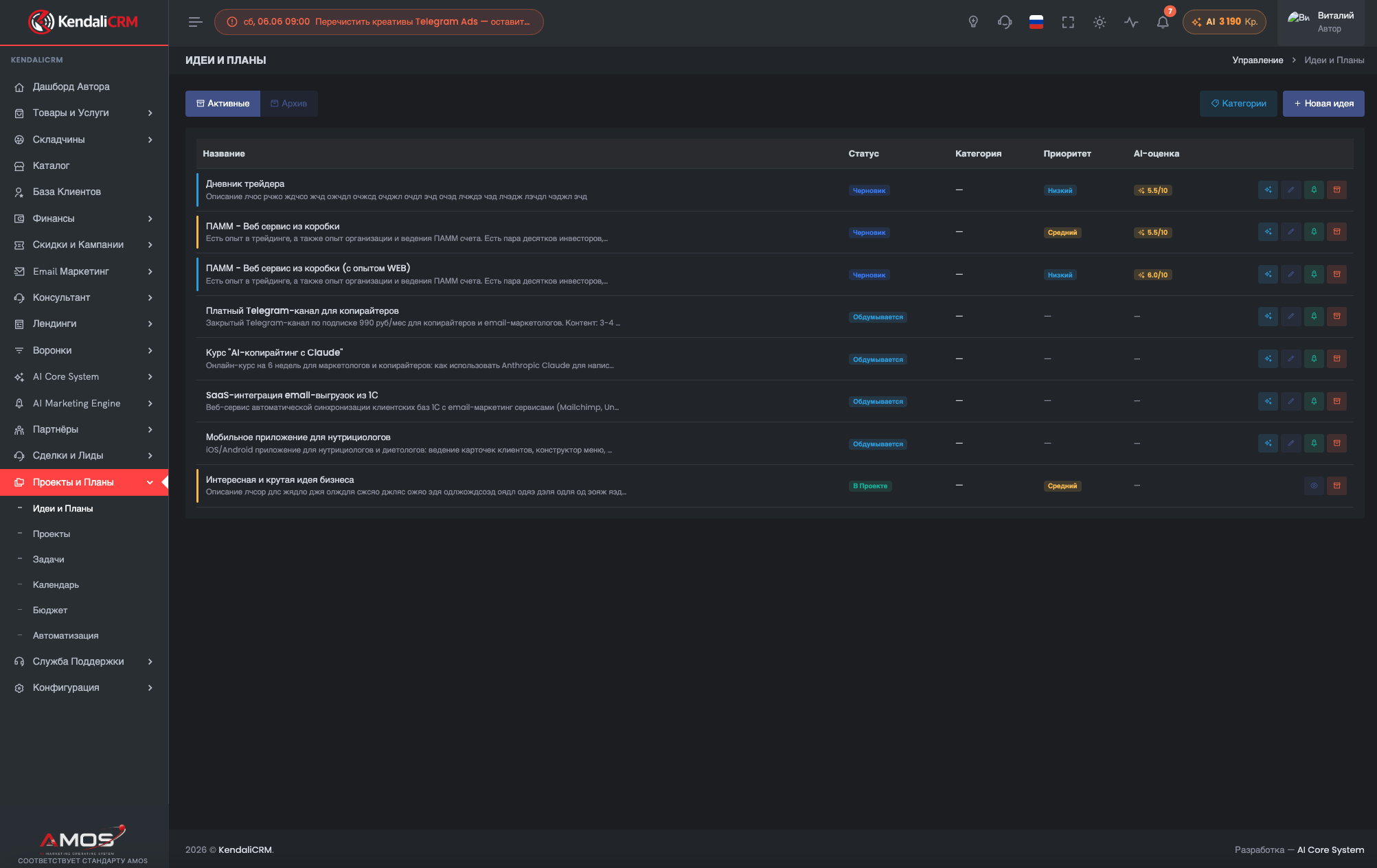
AI Sales Kickoff gives your offer its first plan to reach revenue
Once the product is chosen, the module builds a cold-launch scenario: positioning, audience, first channels and weekly steps all the way to the first payments.
Once sales are flowing, AI becomes your growth mentor
AI Growth Mentor helps you understand how to scale a working offer, while AI Sales Tracking turns regular metric reviews into a management ritual.
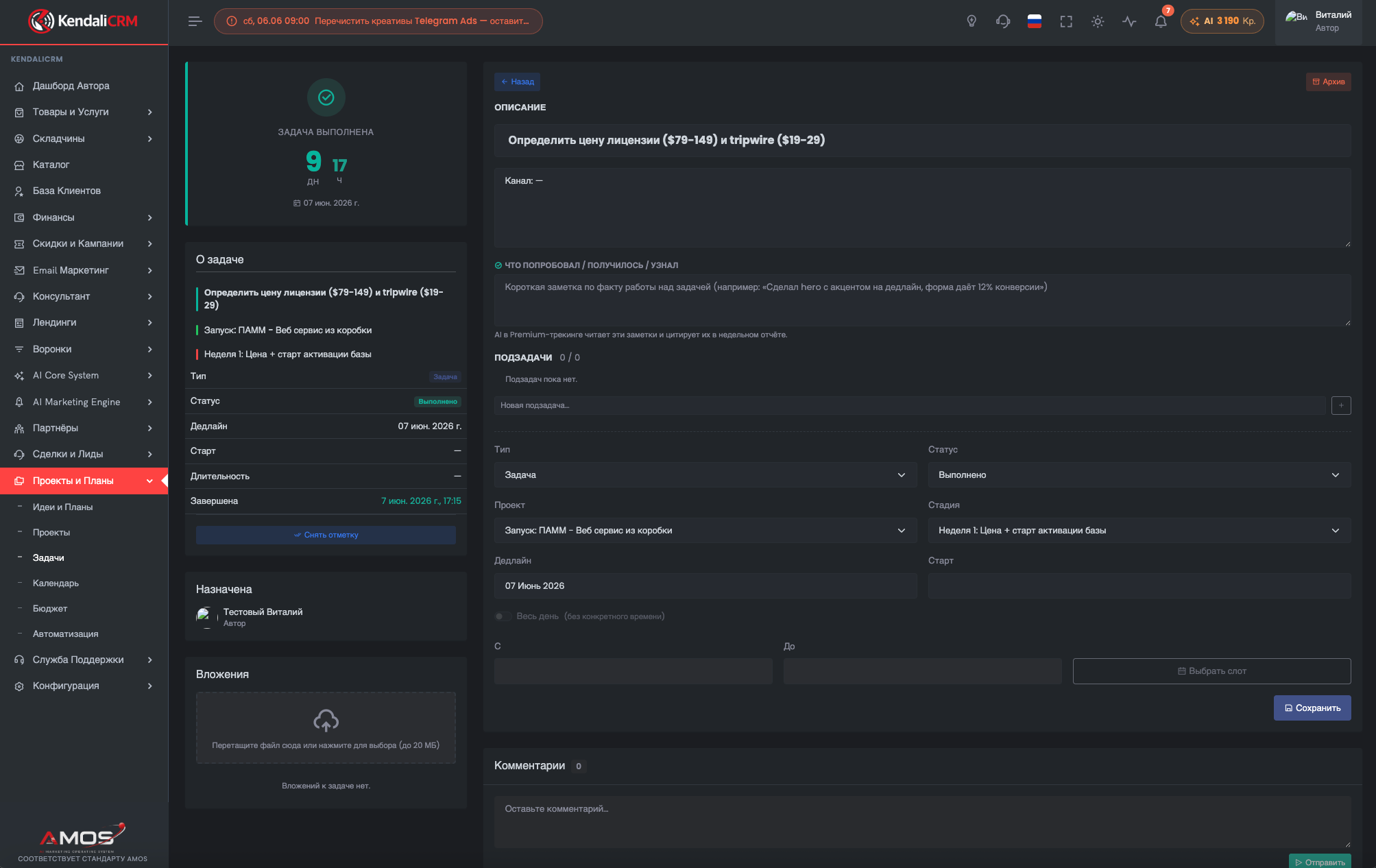
AI designs automations as business scenarios
Workflow Builder helps you describe an automation in a clear structure: trigger, conditions, actions, data, risks and the expected result. It's the bridge between the author's business idea and the technical implementation of the process.
Trigger and Conditions
What starts the scenario — an order, payment, cancellation, lead or ticket — and which conditions must be met: amount, offer, source, segment or customer status.
Actions and Data
What to do — an email, task, notification, stage change, follow-up — and which entities are involved: contact, order, deal, landing, partner.
Risks and Result
Where duplicates, races and automation conflicts can occur, and what should change in the business: less manual work, higher conversion, faster response.
AI Core covers the work of a marketer, an analyst and a project manager
The author gets not abstract "advice from a neural network", but a set of management tools embedded in the CRM context.
AI Core turns CRM data into decisions, plans and automations
The audit shows what's happening. Idea scoring helps you choose a direction. Sales Kickoff gets you launched. The Growth Mentor helps you scale. Tracking keeps the focus on the numbers. Workflow Builder turns process chaos into a clear architecture.